Get the Dirt Your Vacuum Can't Reach
Your vacuum only gets the surface. The dirt, dust mites and allergens trapped in the base of your area rug need professional extraction.
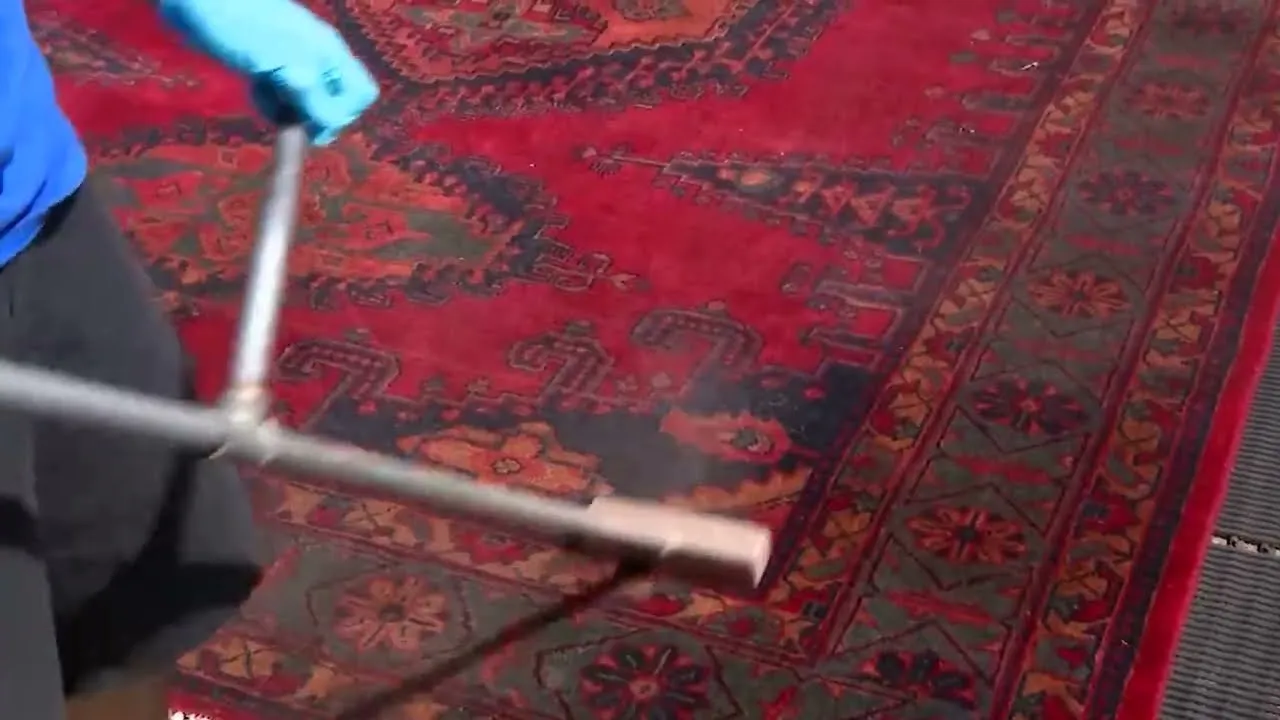
Why Professional Area Rug Cleaning Beats DIY
Rental carpet cleaners saturate rugs with water and leave soap residue behind. That residue acts like a magnet for new dirt — your rug looks clean for a week, then gets dirtier faster than before. We rinse until every trace of soap is gone.
We also remove the rug from your home entirely. Cleaning a rug on hardwood floors risks water damage to the wood. Cleaning it on carpet traps moisture underneath where you can't see it. Both create mildew conditions. At our facility, we control temperature, humidity and airflow throughout the entire process.
The other issue with DIY is drying time. A saturated 8×10 area rug weighs 50-80 pounds. You can't move it easily, and it can't dry properly lying flat on a floor or draped over a fence. In Austin's humidity, a rug that takes more than 24 hours to dry is already growing mildew in the backing. Our facility uses elevated drying racks with controlled air circulation — the rug dries evenly from all sides without any mold risk.
Area Rug Types We Clean
Every rug material has different tolerances for water, heat, agitation and chemicals. We adjust our method for each type. Here's what we see most often in Austin homes:
- → Shag and high-pile rugs. Long, loose fibers trap more soil, pet hair and allergens than any other rug type. Standard vacuuming barely scratches the surface. We submersion wash shag rugs and use extended drying cycles because of the dense pile. Most shag rugs take 7-10 days.
- → Flatweave and kilim. Thin, tightly woven rugs that clean quickly but are prone to color bleeding if not tested first. We always dye-test flatweaves because their dyes sit closer to the surface with less fiber to buffer. Turnaround is usually 4-5 days.
- → Jute, sisal and seagrass. Water is the enemy here. Jute browns and stiffens when saturated. Sisal warps. We clean these with low-moisture dry extraction — no submersion, no wet washing. It's slower but prevents the damage that water causes to plant-based fibers.
- → Synthetic (nylon, polyester, polypropylene). The most durable and forgiving rug material. Synthetics handle water well, resist most chemicals and dry quickly. These are our fastest turnaround at 3-5 days. They also respond best to stain treatment — most stains come out completely.
- → Wool area rugs. Wool is naturally stain-resistant but shrinks when exposed to hot water or high pH detergents. We treat wool area rugs the same way we handle oriental rugs — cool water, pH-balanced detergent, flat drying.
- → Cotton and cotton-blend. Cotton shrinks more than any other rug fiber. We pre-measure every cotton rug before cleaning and use cold water to minimize dimensional change. Some shrinkage (1-2%) is unavoidable with cotton.
- → Indoor/outdoor rugs. Usually polypropylene or recycled plastic. These handle aggressive cleaning well. We wash them with hot water to dissolve ground-in soil and dried spills. Fast drying — often ready in 2-3 days.
Our Cleaning Process
Every area rug goes through a structured process at our facility. The specific products and methods change based on fiber type, but the steps stay the same.
- 1. Inspection and measurement. We photograph the rug, measure its dimensions and note any existing damage, stains or wear. For wool and cotton rugs, pre-measurements let us track any shrinkage during cleaning.
- 2. Dye testing. Even synthetic rugs occasionally have unstable dyes — especially reds and dark blues on cheaper imports. A 30-second dye test prevents hours of damage repair. If dyes migrate, we switch to a dry cleaning approach.
- 3. Dry soil removal. We agitate and extract dry particulate before introducing any moisture. A rug can hold several pounds of sand and grit per square yard. If you add water to that, you're making mud and grinding it into the fibers.
- 4. Pre-treatment. Stains get targeted treatment before the main wash. Pet urine gets enzyme treatment. Red wine gets oxidizing agents. Grease gets solvent spotting. Treating stains before the wash gives the chemistry time to work.
- 5. Washing. Method depends on fiber type. Synthetics and cotton get full submersion. Wool gets hand washing with pH-balanced detergent. Jute and sisal get dry extraction. Every rug gets the appropriate method — not a one-size-fits-all machine.
- 6. Rinse and extraction. We flush clean water through the rug until zero soap remains. Residual detergent is the number-one reason rugs re-soil quickly after cleaning. We then extract excess water with a centrifuge or roller depending on construction.
- 7. Controlled drying. Elevated racks, temperature control, dehumidification and air circulation. No direct heat, no sunlight, no shortcuts. Drying time ranges from 2 days for thin synthetics to 7 days for thick wool or shag.
- 8. Post-inspection. We check for any remaining stains, verify dimensions and groom the pile. If we found damage during cleaning — fringe issues, edge binding problems, moth damage — we let you know and can repair before delivery.
Stains We Remove
We deal with every type of stain that Austin life throws at a rug. Some require specialized chemistry, but here's what we handle routinely:
- → Pet urine and odor. Our most common request. Urine soaks through the pile, through the backing and into the pad underneath. Surface spot cleaning only treats the top layer — the smell returns because the crystals are in the backing. We flush the entire rug from both sides and apply enzyme treatments that break down uric acid. The odor doesn't come back.
- → Red wine and coffee. Both are tannin-based stains that set over time. Fresh spills respond well to our oxidizing treatment. Old dried stains are harder but usually come out 80-95% with repeated treatment cycles.
- → Food and grease. Cooking oil, butter, salad dressing and similar organic stains need solvent treatment before water-based washing. We pre-spot these with a degreaser that breaks down the oil without spreading the stain.
- → Mud and ground-in dirt. Austin's clay soil is the worst. It's red, fine-grained and bonds to fibers. We let mud stains dry completely, then extract the dry clay before washing. Trying to wash out wet mud just pushes the clay deeper into the pile.
- → Wax, gum and adhesive. These need freezing or solvent treatment to harden and lift before washing. We remove the bulk mechanically, then clean the residue.
- → General dinginess. Sometimes there's no single stain — the rug just looks gray and lifeless. That's years of foot traffic, airborne particles, cooking fumes and dust compacting into the pile. A full wash brings the original colors back.
Area Rug Cleaning Pricing
We price by the square foot based on material. Here's what to expect for standard cleaning:
| Rug Material | Price / sq ft | 8×10 Estimate |
|---|---|---|
| Synthetic (nylon, polyester, polypropylene) | $2 - $2.50 | $160 - $200 |
| Cotton / cotton blend | $2.50 - $3 | $200 - $240 |
| Wool area rug | $3 - $4 | $240 - $320 |
| Shag / high-pile | $3 - $5 | $240 - $400 |
| Jute / sisal / seagrass | $3 - $4 | $240 - $320 |
| Indoor/outdoor | $1.50 - $2 | $120 - $160 |
Pet stain/odor treatment adds $1-2/sq ft. Stain-specific treatments (wine, wax, dye transfer) quoted individually. Free pickup and delivery on all orders.
How to Maintain Your Area Rug Between Cleanings
Professional cleaning every 1-3 years keeps your rug looking good long-term. Between visits, these habits make the biggest difference:
- → Vacuum weekly. Use the highest pile setting on your vacuum. For shag rugs, use suction only with the beater bar turned off.
- → Rotate every 6 months. Turn the rug 180 degrees to distribute foot traffic and sun exposure evenly.
- → Blot spills immediately. White cloth, cold water, blotting motion. Never rub — rubbing pushes the stain deeper and damages fibers.
- → Use a rug pad. Rug pads prevent slipping, reduce wear and allow air circulation under the rug. Without a pad, moisture gets trapped between the rug and floor.
- → Keep out of direct sunlight. UV rays fade dyes and weaken fibers over time. If your rug is near a window, close blinds during peak sun hours or rotate more frequently.
- → Don't use store-bought spot cleaners. Most retail rug sprays leave sticky residues that attract dirt. If you need to treat a spot between professional cleanings, use plain cold water and a white cloth. That's it.
Carpet Cleaning vs Rug Cleaning — Why It Matters
A carpet is glued or stretched over a pad that's tacked to the subfloor. Water gets extracted from above and residual moisture evaporates through the carpet and pad. The carpet is ventilated from both sides.
A rug sits on top of a hard floor. Water has nowhere to go. The backing traps moisture. If the rug sits on hardwood, the moisture damages the floor. If it sits on carpet, you've created a mildew sandwich that nobody can see until it smells.
That's why rug cleaning belongs at a facility — not on your floor. We control the drying environment completely. Temperature stays between 68-75°F, humidity stays below 40% and air moves constantly. Zero mildew risk. Zero floor damage.
Carpet cleaning companies don't operate this way. They clean on-site, on your floor, with a truck-mounted machine. It works for carpet because carpet is designed for it. Rugs aren't.
Frequently Asked Questions
How much does area rug cleaning cost in Austin?
Starts at $2/sq ft for synthetics, $3/sq ft for natural fibers. A standard 8×10 synthetic rug runs about $160 with free pickup and delivery.
Can you clean a shag rug?
Yes. Shag rugs need submersion washing to reach dirt trapped deep in the long pile. Extended drying time of 5-7 days due to pile density.
How do you clean a jute rug?
Low-moisture dry extraction only. Jute browns and stiffens when saturated with water. Our dry method removes soil and odors without water damage.
Will cleaning remove pet urine smell?
Yes. We flush the rug from both sides and apply enzyme treatments that break down uric acid crystals in the backing. The odor is eliminated, not covered up.
How long does the cleaning take?
3-5 days for synthetic rugs. 5-7 days for wool, cotton or shag. 7-10 days for thick, heavy rugs that need extended drying.
Can I use a carpet cleaner on my area rug?
Not recommended. Carpet cleaners push too much water through, leave soap residue and can't dry the backing properly. This leads to mildew, faster re-soiling and premature wear.
Have a specialty rug?
We also clean oriental rugs and Persian rugs with specialized hand-washing techniques. Need rug repair? We handle fringe, edges, patches and reweaving in-house. Free pickup across the entire Austin metro.
Get Your Area Rug Estimate
Tell us the size and type. We'll pick it up for free.